The Roster of Diagnosticians Who Audit Construction and Logistics Operations Before Any AI Vendor Gets a Scope
Pre-vendor audits reveal which processes are ready for AI.

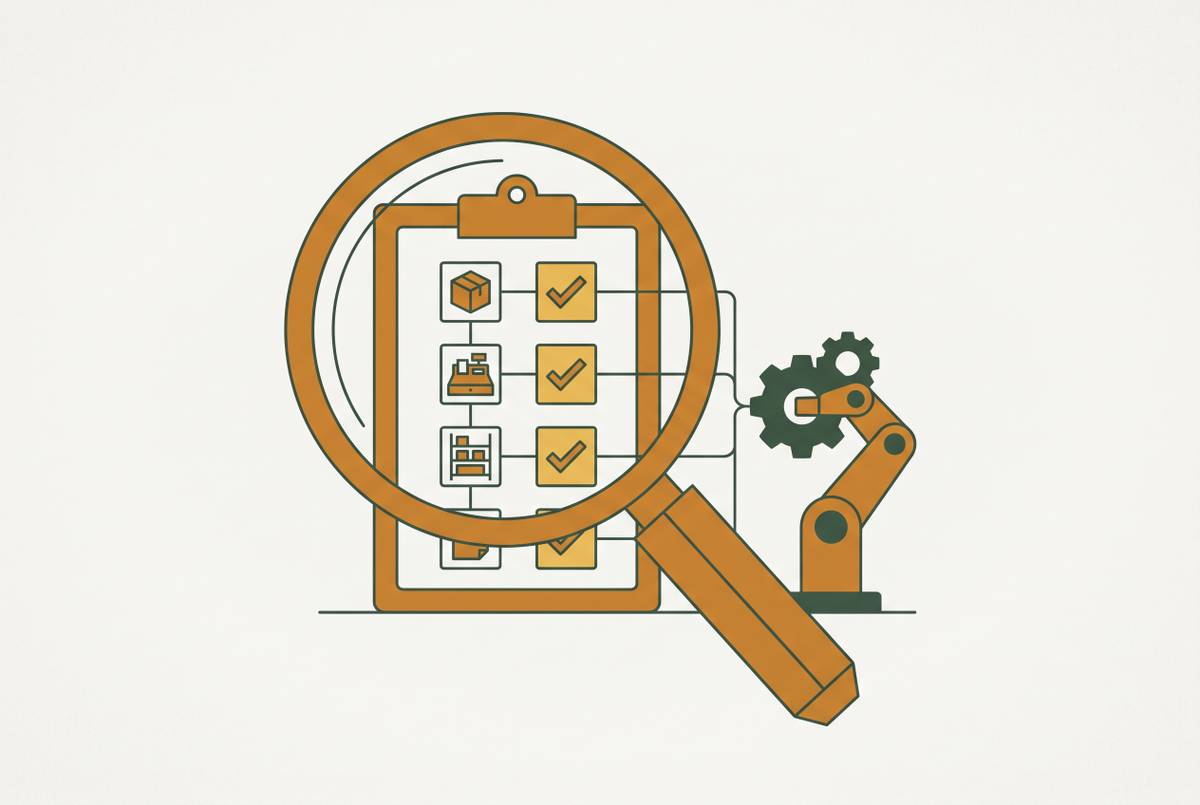
A process audit before AI deployment in construction and logistics operations must establish how work actually runs. Construction schedule risk analysts, commissioning-focused project controls specialists, logistics TMS integration specialists, and experienced operations leads can do this diagnostic work. Their task is to identify which processes are ready for automation, which need repair, and which should remain outside an AI vendor’s scope.
Why construction and logistics AI projects fail before they start
Most failures start before a tool is chosen. Capable AI systems enter workflows where no one has properly mapped the data, the decisions, or who owns the work. Model performance cannot repair those omissions. An agent may perform its assigned task while the organization remains unable to trace its actions, reconcile its inputs, or determine who should respond to its output.
In logistics, incomplete TMS data, unreliable GPS recording, or improperly tracked inventory makes AI output unreliable before anyone evaluates the model. In construction, the corresponding failure is an insight that cannot change the outcome because the underlying records or operating structure cannot support action. Grant Thornton identifies consistent reconciliation of schedule, cost, and operational data as a construction AI readiness criterion. It separately states that outcome-changing insights depend on how the organization is structured to interpret and respond to them. These are distinct requirements, and neither can be established by selecting software.
The gap between documented process and actual process — and why it is where risk lives
A documented process describes the official route for getting work done. Actual operations include the judgments and workarounds that keep that work moving when the official route fails. That difference is not merely untidy administration. It contains both opportunities to improve performance and conditions that can defeat automation. Scoping from documentation alone mistakes an account of intended behavior for evidence of operational behavior.
Construction schedules make this distinction especially clear. P6 and equivalent schedules capture intent, but milestone dates do not independently establish achievability. Meeting those dates depends on procurement lead times, coordination sequences, and commissioning readiness, yet a schedule file does not reliably represent them. A declared milestone needs to be checked against evidence beyond the plan. Without that comparison, an AI deployment can be scoped around dates whose operational basis remains untested.
In logistics, the equivalent gap separates the TMS record from what dispatchers and drivers actually do. Route overrides, manual workarounds, and exception handling may never be recorded in the system of record. Standard project scoping misses this when it treats recorded transactions as a complete description of the process. The gap cannot be resolved from an organization chart or a process manual because neither shows how people handle work that departs from procedure.
What an operational diagnostician actually does — the audit as a distinct professional act
An operational diagnostician investigates that gap before an implementation decision exists. The role is distinct from AI implementation, change management, and IT project scoping because its conclusion remains open. An audit may identify an automation candidate, but it may instead establish that the process needs repair or that its data cannot support the proposed use. Its output is a prioritized set of process candidates. It is not a feature recommendation or a vendor shortlist.
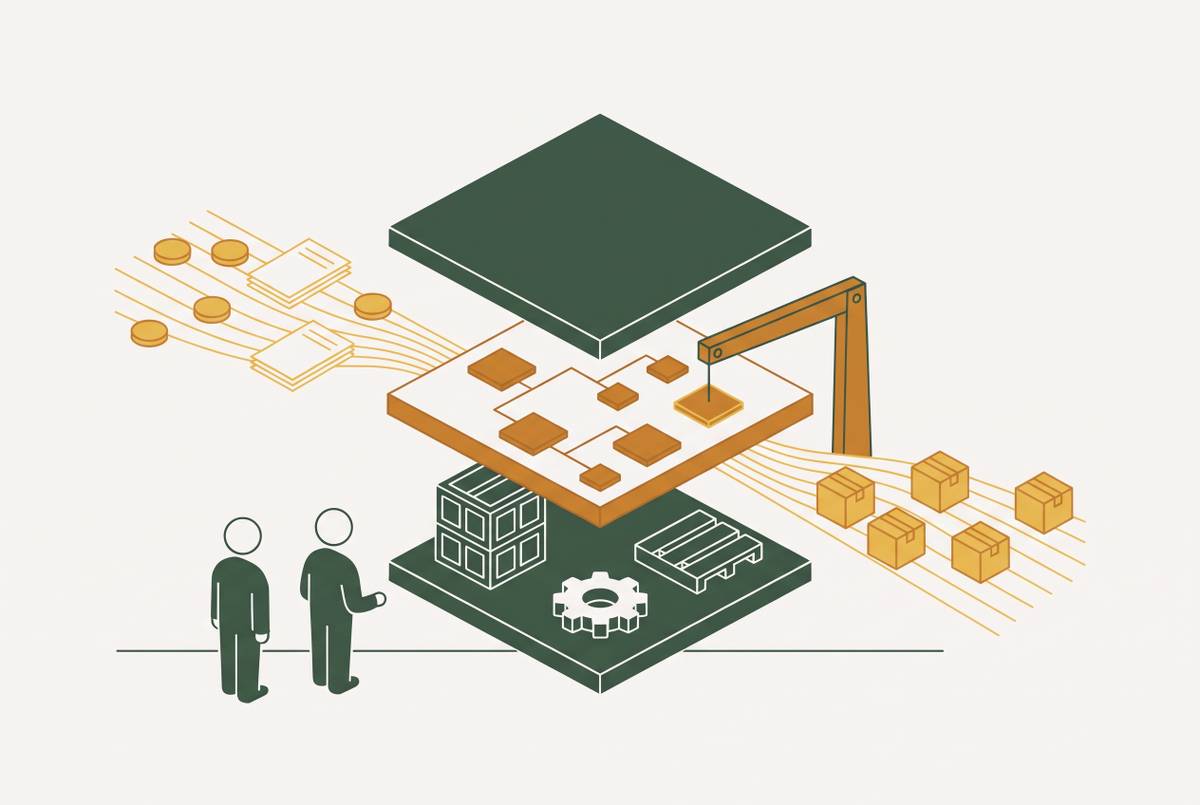
The work is bottom-up because the relevant evidence sits with the people performing the process. Direct observation, honest interviews, and historical operational records establish what happens. Tool inventory and overlap, workflow mapping, shadow IT identification, data flows, pain points, and AI opportunity scoring all belong within this diagnostic work. Each contributes a different part of the evidence. Together, they establish whether an apparent AI opportunity rests on a workable process.
The audit also looks below the application layer. In manufacturing, for example, the audit begins with OT/IT connectivity and the data available from PLCs, SCADA, sensors, and MES because connectivity readiness shapes the transformation timeline. A model cannot substitute for that foundation. In construction, the evidence includes historical project data and accounts from operations staff of how the work went. Measurement before implementation is essential because an outcome claim cannot be validated afterward without a baseline.
Who fills the diagnostician role in construction operations
Construction requires practitioners who can compare field evidence, schedules, and procurement records without treating any one of them as authoritative on its own. Schedule risk analysts qualify when they supplement P6 exports with procurement and coordination data. Commissioning-focused project controls specialists can also check whether the planned completion date matches when operations will be ready. Experience supplies the necessary context for that comparison. Operations leads from general contractors and specialty trades can also fill the role when they have examined delayed energization or procurement failures through project post-mortems.
Declared milestone dates must be read against actual procurement lead times, submitted RFIs against resolved RFIs, and permitted scope against energized scope. These comparisons expose different kinds of incompleteness. A submitted question is not a resolved constraint, just as permission to build does not establish readiness to operate. The diagnostician must distinguish evidence of progress from evidence that a dependency has actually been satisfied.
The Suffolk / MIT white paper, Construction in the Age of AI, identifies six AI value domains, including design automation, offsite manufacturing, permitting, scheduling, skilled labor and subcontracting, and supply chain and procurement. Each requires different records and field interviews. Data center energization illustrates why those distinctions are consequential. A fully permitted project with committed capital can still be years from operation if transformer procurement, switchgear, and substation upgrade timelines have not been independently compared with the schedule. The relevant qualification is the ability to test those dependencies.
Who fills the diagnostician role in logistics operations
Logistics places data quality triage at the center of diagnosis. Before talking to a vendor, the practitioner must find out which sources of operational data can be trusted enough to support the proposed AI work. Incomplete or non-normalized TMS records, unreliable GPS recording, and improperly tracked inventory are specific failure conditions. The audit must check whether the records show how operations run accurately enough for people to base decisions on them.
TMS integration specialists with post-implementation experience are suited to this work because they know how to make operational integration work beyond the pre-sale presentation. Experienced 3PL operations leads know the exception-handling workflows that never reach the system of record. Supply chain data engineers do source-of-truth analysis before modeling begins. These are complementary forms of diagnostic competence. The role requires an ability to connect data reliability with the work that produced the data.
That connection separates the logistics audit into three related layers. It establishes what data exists and where it lives, compares recorded activity with dispatcher and driver behavior, and distinguishes repetitive decisions from decisions requiring contextual human judgment. The last distinction limits the automation candidate set. Logistics AI buying criteria increasingly include traceability, human override paths, auditability, and compliance readiness, so the diagnostician must evaluate those conditions too. Unlike a data inventory, this assessment addresses whether a process can be operated responsibly after automation.
What separates a qualified diagnostician from a vendor doing pre-sales discovery
Discovery asks where a product fits, while diagnosis asks what the process needs and whether AI belongs in it at all. A commercial discovery exercise is organized around a possible sale. An independent audit must help people decide what to do even when it finds no basis for that sale.
The practical qualification is freedom to return an unwelcome finding. A diagnostician must be able to report insufficient data volume, records that cannot be reconciled across systems, or decision logic that depends too heavily on context for current agents. The audit must also be able to identify a broken process whose failures automation would accelerate. That conclusion can end the proposed deployment entirely.
Governance exposes the same conflict at the organizational level. Fragmented ownership, poor transparency, and inadequate monitoring are not simply features to add to a software scope. They can be reasons not to proceed. Treating them as implementation details allows the buying decision to precede evidence that the department can operate the system. Independence therefore means more than working outside the vendor’s organization. It means having a remit that permits delay, process repair, another solution, or no AI deployment.
How to find broken workflows before any AI vendor gets a scope
For an operations leader commissioning the first audit, the appropriate starting point is one painful, high-volume, data-rich process. The process should involve repetitive decisions, leave a clear data trail even if that trail is messy, and have a visible, attributable cost of failure. These conditions set the bounds of what the audit will cover. They also make it possible to connect a proposed improvement to evidence.
Within that boundary, the audit should first show how the process runs today and where it hurts. It should then compare documented procedure with actual practice, assess data quality and reconcilability, and identify the real decision points. AI opportunity scoring follows that work. The sequence prevents an attractive use case from becoming a commitment before its dependencies are understood. It also allows the audit to show when data repair or process repair needs to come first.
A retail group began by consolidating four regional spreadsheets into a single structured system for procurement and vendor management. AI-assisted approval routing followed in a second phase, once data consistency could be trusted. The initial intervention was therefore not AI automation. The audit logic established the foundation that the later automation required.
A two-week fixed-scope audit is an achievable and appropriate format for most department-level construction and logistics processes. That gives people time for honest field interviews while keeping the work focused on findings they can use to make a decision. The scope must be small enough for the work to be done in that time. Where a dependency such as OT/IT connectivity introduces substantial additional work, the audit should expose it before an implementation timeline is set. Discovering that constraint early is part of the deliverable.
What the audit must establish before any AI scope is written
A completed audit must answer four questions, each of which can justify a decision not to proceed. First, is the underlying data complete, normalized, and reconcilable across systems, and what work and time would correction require? Second, are the decision points repetitive and rule-bounded, or do they require contextual judgment that current agents cannot reliably exercise? Both answers constrain the scope before procurement begins. In construction, the data assessment must explicitly address schedule, cost, and operational records, while logistics requires a comparison between the TMS record and actual operations.
Third, the audit must assess whether the process itself is sound enough to automate. The fourth is whether the department has the ownership structure, monitoring capability, and governance needed to operate an AI agent in production. Technical feasibility does not answer either question adequately. A process can have usable data and repetitive decisions while still containing failures that automation would accelerate. It can also be operationally coherent without anyone being clearly accountable for the agent’s actions.
A “not ready” result is a valid completed audit when the evidence establishes why the proposed deployment should wait. Where the conditions are satisfied, the scope can identify the process, its usable data, its decision boundaries, and its operational ownership. The vendor then receives a defined execution problem rather than an invitation to diagnose the business while selling to it. That is the practical authority a pre-AI audit gives the buyer.