Retail Operations Process Audits Before Automation Investment
Auditing processes first prevents automation from speeding up broken workflows.

A retail operations process audit before automation investment compares the documented workflow, the work performed on the floor, and the records held in systems. Its purpose is to find what must change before automation can improve results. The central conclusion is that an audit changes both the automation target and the order of investment, because automating a broken process makes its failures faster and harder to correct.
Why automation without process clarity amplifies retail dysfunction
Retail automation in 2026 is moving from task replacement to decision automation. Detecting an empty shelf is a bounded task. Checking backroom inventory, estimating revenue at risk, prioritizing replenishment, and dispatching a store associate form a chain of decisions. Each action depends on the accuracy of the information and the soundness of the process before it. That dependency makes process clarity more important as automation takes on more responsibility.
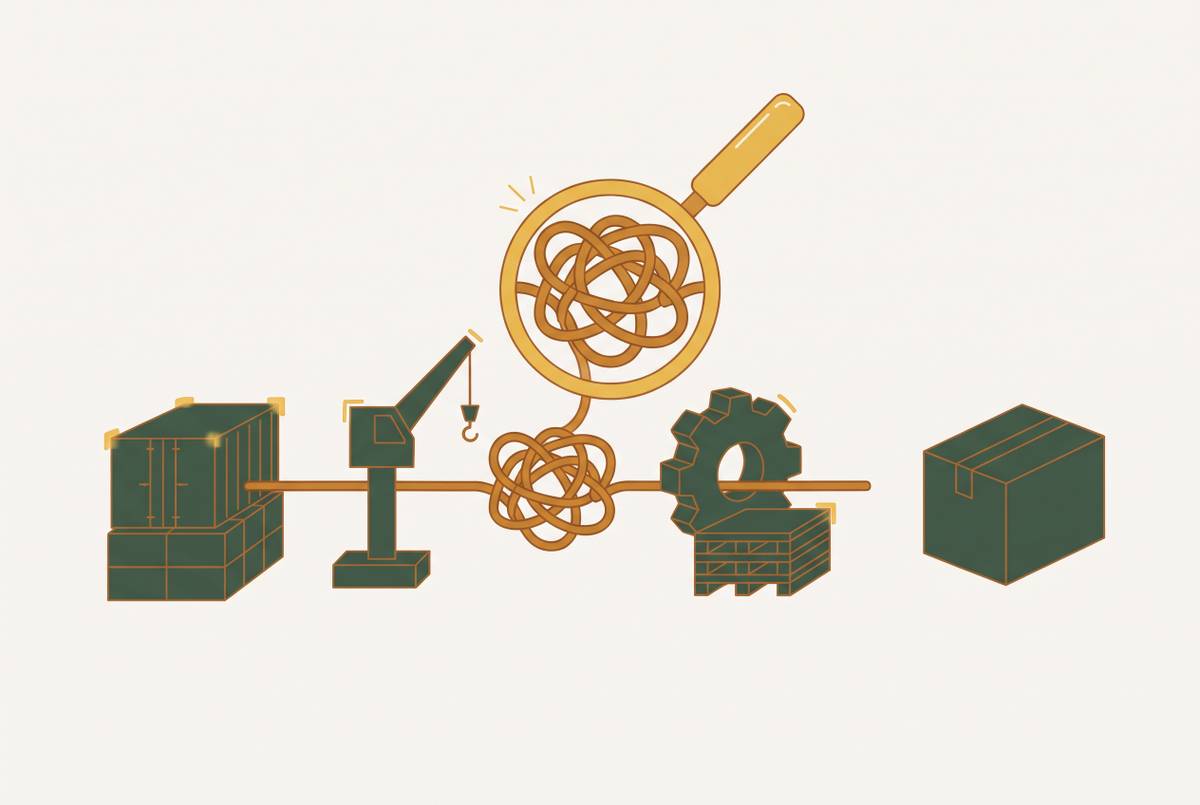
An inventory allocation system cannot fix wrong stock counts just by acting on them faster. Instead, it can worsen availability by reallocating stock on a false premise. The same structural problem applies when task ownership is unclear or exception handling is undefined. Automation executes the process it receives, including the faults that people previously worked around. The audit is therefore a precondition for an honest investment decision.
Terminal Use, an AI-first operations rebuilder for retail and other asset-heavy sectors, starts with this distinction between rebuilding work and layering technology onto it. Its process audit examines the gap between documentation and floor reality before deciding what to rebuild. A retailer must understand where work fails before deciding which decisions a system should carry out.
What a process audit actually examines in a retail operation
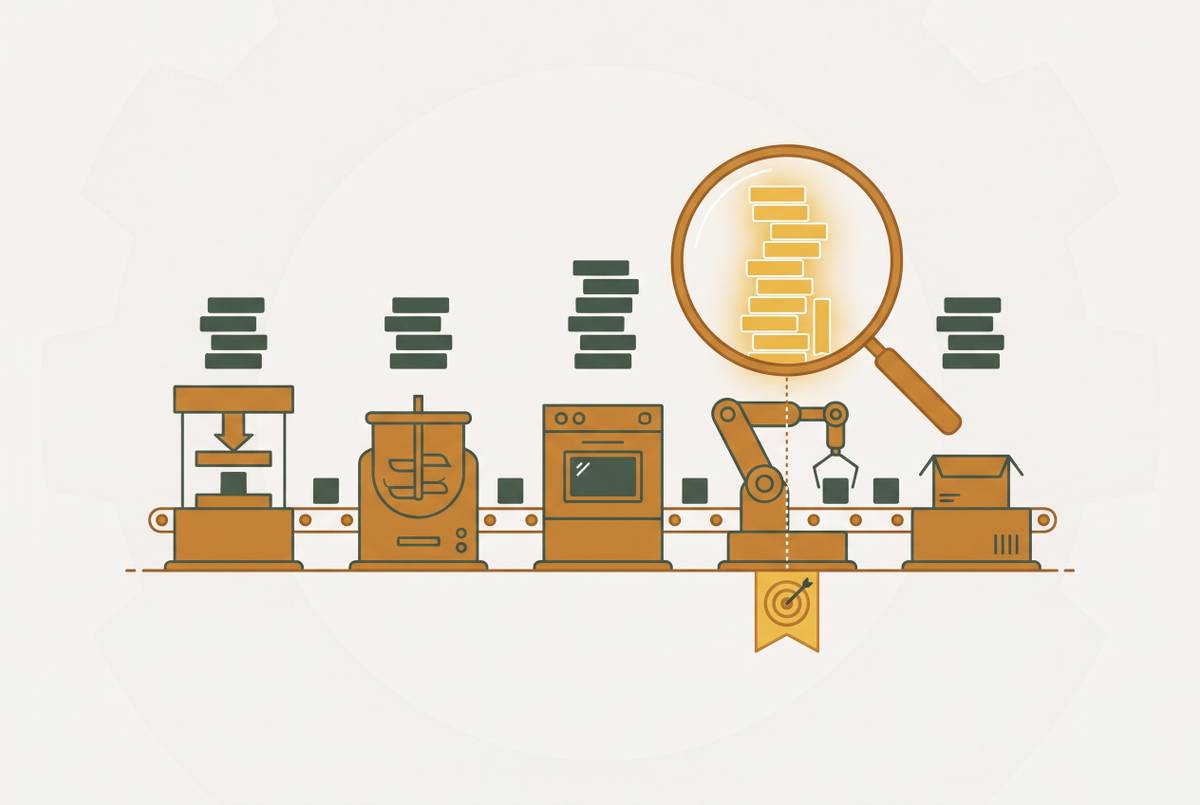
A thorough retail process audit looks at three layers, the designed process, the actual process, and the data trail. SOPs, planograms, and scheduling documents describe the intended workflow. Store associates reveal the actual workflow through what they do under real shift conditions. Systems provide a separate account of what happened. These accounts rarely match, and the differences reveal risks that a document review alone cannot expose.
The actual process is the easiest layer to miss. Shrink may spike around certain shift changes, backroom inventory may go unreconciled, or promotional signage may go up after the peak sales window. Having an SOP for the work does not make those failures clear. Having store teams demonstrate how work runs today, as Terminal Use does in its audit approach, brings those discrepancies into view. The diagnostic must then connect the observed failure to the record that an automated system would use.
Merchandising compliance establishes whether planogram sets, promotional displays, and signage directives reach the floor correctly. Inventory accuracy connects perpetual inventory reconciliation and backroom organization to on-shelf availability. Workflow sequencing establishes who receives a task, who owns its completion, and where an exception goes. Data integrity then tests whether item master details, including case pack dimensions, unit of measure, and item setup, agree across systems. Together, these dimensions distinguish an execution problem from a corrupted input or an undefined handoff.
The audit must also separate a process design flaw from a training gap. If many stores fail the same checklist item, individual store underperformance is not an adequate diagnosis. The instruction may be impractical, or associates may not know how to carry it out under floor conditions. Those causes call for different fixes even when the recorded result looks the same. Automating the item before finding out which cause is at work risks making people follow a rule they already misunderstand.
Where retail processes break down most often — and what that costs before any automation decision
The most expensive failures are not always the most visible ones. Inventory inaccuracies, missed promotional execution, and conflicting system records can damage the P&L without presenting a clear problem on a camera feed. Their importance lies partly in their recurrence across locations and transactions. More importantly, they demand different remedies. A single automation program cannot treat them as interchangeable forms of inefficiency.
An average for the whole chain can hide the product-location-day combinations where customers find empty shelves. Examining availability at that level separates a general replenishment concern from a specific operational fault. If the problem is detecting an empty shelf, computer vision and sensor-driven store intelligence may be appropriate. If the shelf remains empty because the inventory record is wrong, better detection alone does not repair the cause.
Promotional compliance presents a different failure. Marking signage complete after it goes up past the peak sales window cannot bring back the lost chance to sell. When work is late or done wrong across hundreds of locations, revenue is lost as part of how the business runs. The relevant intervention may therefore be task management and digital execution workflows. Assignment and follow-through must work before faster execution has value.
Item master errors require a more foundational response. Wrong case pack dimensions, mismatched units of measure, and inconsistent item setup put downstream transactions at risk before any automated decision occurs. Master data remediation must come before automation that depends on those records. Otherwise, the retailer spends capital embedding the wrong inputs in a process that becomes harder to change. The audit earns its place before investment precisely because these faults point to different first actions.
What field evidence shows when retailers skip the audit and automate first
The retail failure pattern is a gap between success in testing and reliability in production. A system can handle the expected workflow while failing on the exceptions and handoffs that define daily operations. Routine-case performance does not establish that the surrounding process is understood. Production exposes the parts of that process that the original design left out.
Leanware identifies returns processing as a useful example of this boundary. A returns agent can handle routine cases end-to-end and send complex cases to human agents. But that division works only when the exception categories and the handoff are defined. If they were never mapped, the agent can route the wrong cases and leave human agents without context. The failure is not simply an inadequate agent, but an incomplete account of the work the agent was expected to perform.
Agentic AI makes these omissions consequential because it can act on an issue. Permissions, approval thresholds, human override options, and full audit trails bound that authority. Yet those controls require a prior understanding of the process. To set an approval threshold that works, a retailer must know which decisions need approval, and to define an override, it must know where someone needs to step in.
POS, inventory management, ecommerce, warehouse management, promotions, and customer databases can hold different versions of the same information. Connecting them does not by itself determine which record should govern a decision. When that unresolved governance problem emerges during deployment, it becomes a schedule and budget problem as well as an operational one. Associates may also resist a system that reflects the documented workflow rather than the process they actually use, compounding the mismatch between design and production.
What the audit almost always changes about automation sequencing
A thorough audit will usually change the original automation roadmap. It reveals prerequisites, shifts priorities, and can identify improvements that need no new technology. The investment is now being judged against the actual cause of failure. The roadmap sets out what to do in what order, moving beyond a list of appealing capabilities.
Corrupted item master data changes an AI-driven replenishment proposal into a data remediation priority. The replenishment engine may still have a role, but it cannot make reliable decisions from unreliable inputs. A promotional compliance gap produces a different sequence. Digital task management with human accountability may come before an autonomous execution agent because assignment and follow-through, rather than speed, are the missing capabilities. In both cases, the audit preserves the distinction between the eventual opportunity and the immediate requirement.
Process stability also determines what is ready to automate. Leanware identifies returns processing as one of the highest-ROI automation targets, but the opportunity depends on the workflow beneath it. A typical return spans customer contact, agent review, authorization, label generation, warehouse receipt, inspection, and refund processing. An audit must establish which straightforward cases can pass through that sequence automatically and which complex cases need human handling. A process with unsettled exception routes is not equivalent to one whose boundaries are clear.
More ambitious capabilities have their own prerequisites. Hyper-personalization and dynamic product bundling need real-time inventory and margin data that are accurate. If those inputs are unreliable, personalization automation moves from a first-priority to a third-priority investment. An audit makes that need clear before spending starts.
This ordering also explains the emphasis on operational pain in Terminal Use's process-first approach. What gets rebuilt is based on where the work has been shown to fail, even if the retailer had planned to deploy a different platform. The practical output is a sequenced map of what to fix first, what to automate second, and what to defer until data and process stability are in place. That map is more useful than a pass/fail verdict because it explains how the retailer can move from present conditions to a defensible deployment.
How should a retailer structure a process audit before implementing AI automation tools
The audit should begin with the most painful process. Rework, exception volume, and the cost of failure provide the relevant criteria. They direct attention toward work whose repair matters operationally, even when it is not prominent on a dashboard. Starting there keeps the audit tied to a business problem.
Observation should precede interviews. Asked how a process works, associates may describe the designed workflow and omit the adjustments made during a real shift. Observing exception handling and backroom behavior exposes those adjustments before the discussion turns to explanations. The actual process map should then record every handoff, exception route, and manual correction. Its value comes from representing the work performed.
The data trail needs a separate assessment. The audit should find where systems record each event and whether those records match the work seen on the floor. It should also identify which systems hold authoritative data for particular decisions and where conflicting records remain unresolved. This data quality assessment defines what would have to be true for an automated system to trust its inputs. It resolves which records should govern decisions before connecting the systems makes unresolved conflicts a deployment issue.
Each identified failure should receive a root cause classification, namely a process design flaw, training gap, data integrity problem, or system limitation. That classification connects the diagnosis to the appropriate intervention rather than treating every gap as a software requirement. The final output is a sequenced action list with the rationale for each decision made explicit. Together with the actual workflow map and data quality assessment, these outputs explain what must change before automation, what can proceed first, and what should wait.
An honest audit may conclude that the first improvement is an operational change requiring no new technology. That finding makes the subsequent investment more defensible, because the automation will enter a process whose requirements and limits are understood. It also avoids making completion of the broader roadmap a condition for every useful deployment. An audit that goes into enough detail can show what to tackle first while the wider plan is still taking shape. Speed and rigor are not opposing choices, because the audit supplies the clarity that makes rapid, confident automation possible.