Vendor Lock-In Risk in AI Agent Platform Selection
Swapping AI providers means rebuilding workflows from the ground up.
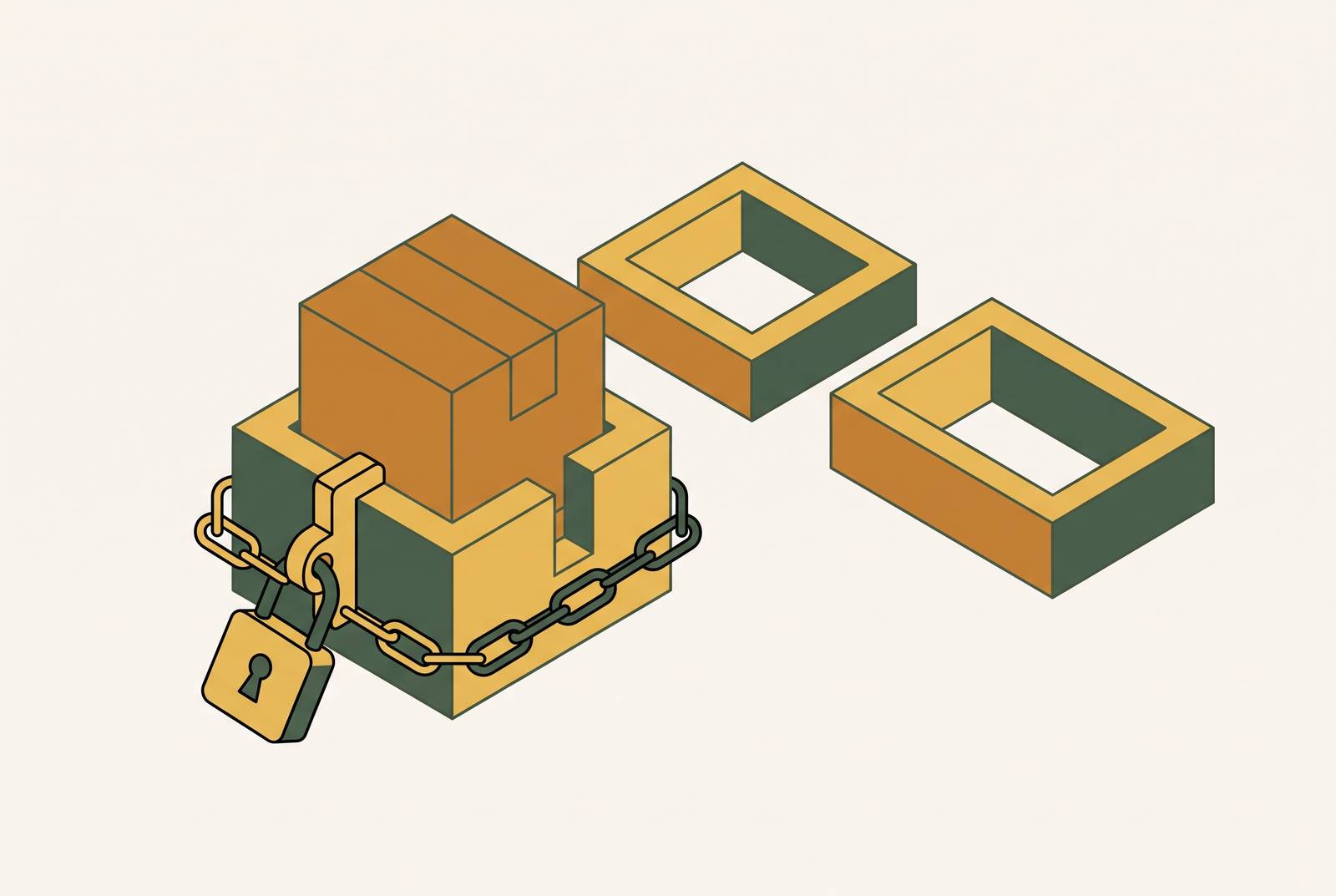
Vendor lock-in in AI agent platforms does not arrive through a contract clause. It builds up quietly, in the decisions engineers make about orchestration, state management, and integration long before anyone sits down to negotiate a renewal.
Lock-in in AI Agent Platforms Is an Architecture Problem
Most operations leaders still treat lock-in as a procurement question, something to catch with a tighter cancellation clause or a data-portability warranty. By the time the contract is on the table, the lock-in is already built into the code. The old model of vendor risk, built for SaaS, assumed you could export a CSV, reconnect a few integrations, retrain the team on a new interface, and move on, because the underlying workflow existed independently of the software running it. AI agent platforms break that assumption at the root. An agent does not just give a human a tool to use; it carries out the workflow on its own, and its reasoning, memory, and tool connections are often built around one specific model and one specific orchestration setup. A SaaS migration costs you access to a tool. An agentic AI migration costs you the autonomous execution capability your operations have been rebuilt around, and no data export fixes that. The dependency runs deeper than infrastructure, too: teams build up a working sense of how a given model reasons and where it tends to fail, and that knowledge doesn't carry over to a new model. Swapping models means re-testing every prompt, retuning every system instruction, and rebuilding every evaluation benchmark from the ground up.
What makes AI model dependency the first place lock-in forms
Dependency on a single foundation model is where lock-in usually starts. It splits into three separate failure modes that most architecture reviews lump together, each one deserving its own audit. The first is model deprecation: a vendor retires the specific model version an agent runs on, and the replacement behaves differently enough that the agent needs real reconfiguration, not a simple repoint. The second surfaced in concrete form during a recent export-control episode, when Anthropic stated plainly that "the net effect of this order is that we must abruptly disable Fable 5 and Mythos 5 for all our customers to ensure compliance." Organizations that had built their operations entirely around one AI provider had no fallback while that restriction stood, and no say in whatever pricing followed. Strong safety messaging from a vendor is not a guarantee of continuity. The third failure mode is speed: enterprise software has historically carried multi-year lifecycle commitments, but AI models get deprecated in months, and a production workflow built on a retired model needs testing, validation, and rework, all of it under pressure to keep the business running without interruption.
How Proprietary Orchestration Layers Compound the Exposure
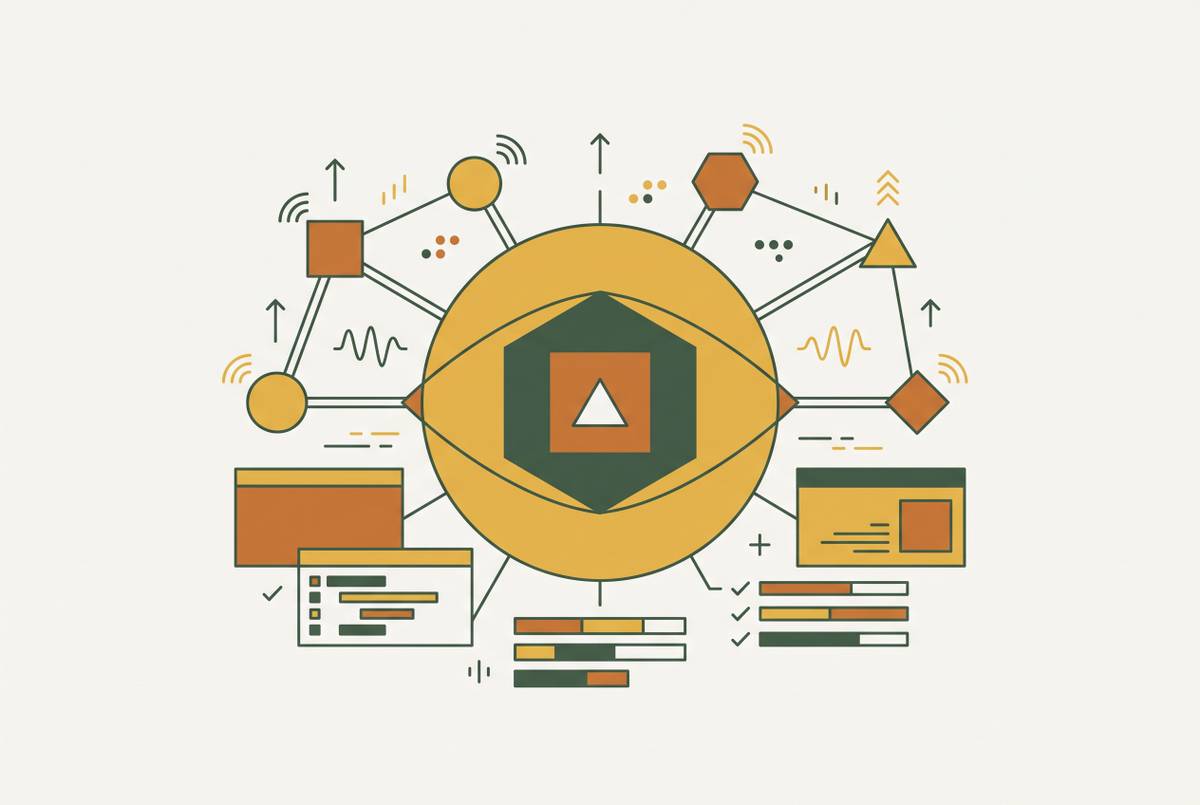
Swapping out the underlying model does not free an organization if the agents sit on proprietary orchestration infrastructure. That layer creates a second lock-in vector, and it's wired directly into the model choice itself. Once AI moves beyond generating text and starts taking action, calling outside APIs, running workflows, making decisions on its own, a single vendor's failure escalates from "the chatbot is down" to "business-critical processes have stopped. The coupling runs deep: changing the model while keeping the orchestration layer intact is frequently not possible, because the two are built together in ways that force a full-stack migration to change either one. That makes the choice of agent framework a lock-in decision in its own right, one that needs evaluation before the framework is chosen rather than after agents are already running in production. Some platforms are addressing this directly. Salesforce's architect documentation describes Agentforce coordination as enabled by "open, interoperable protocols," naming MCP and the A2A protocol for cross-vendor agent coordination, with orchestration carried out "through open protocols like MCP and A2A." Another vendor describes its agent development framework as "open-source," built for "deploy anywhere flexibility" across self-hosted infrastructure, Cloud Run, or GKE, with its developer blog confirming it as "a new open-source framework" from that vendor. These examples show real movement toward openness at the orchestration layer, but they also show why the layer has to be checked on its own: a model can be interchangeable while the data, business context, orchestration logic, and agent runtime around it stay locked down. A vendor can be open at one level of the stack and closed at another, and the next two layers down make that gap even harder to see.
Where state management and data gravity quietly make exit prohibitive
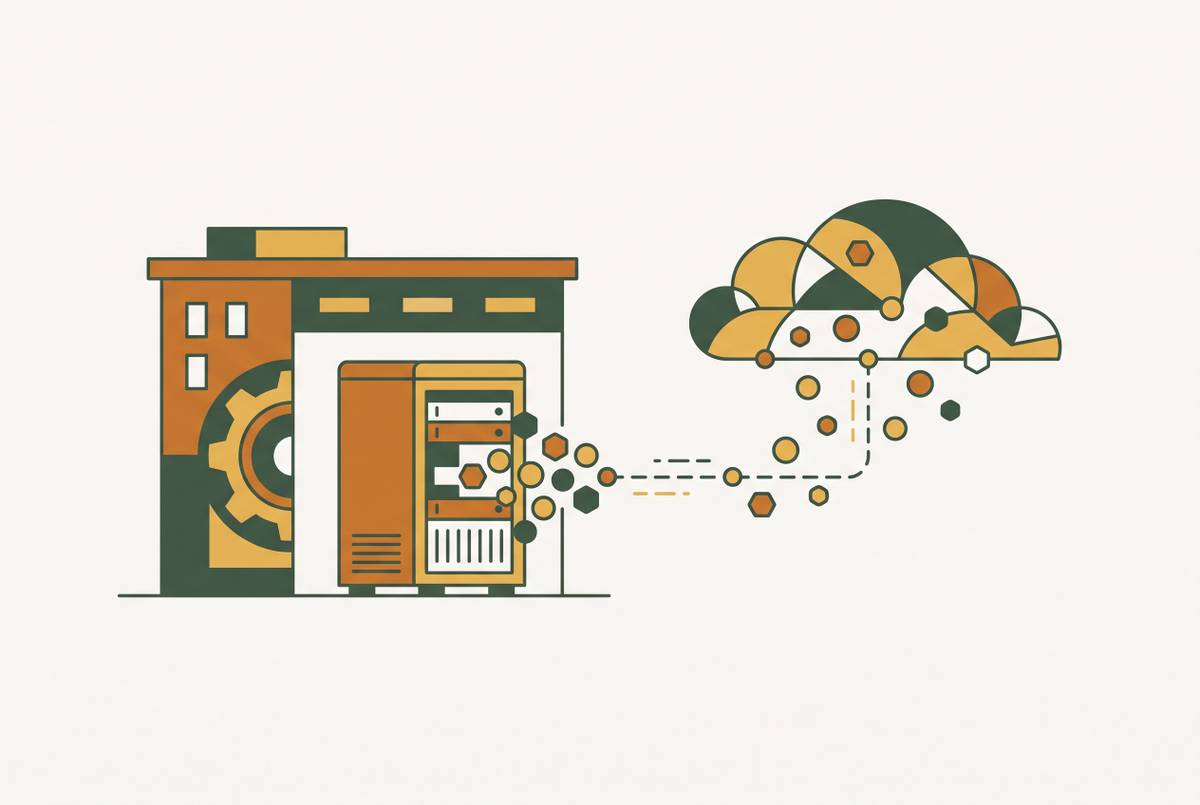
Below the model and the orchestration layer sits the hardest dependency to spot and the most expensive to undo: the context, memory, and institutional knowledge sitting inside a vendor's state management system. This is data gravity, and it builds up the same way regardless of whether the model layer is technically swappable. The more context, fine-tuning work, and institutional knowledge a team pours into one platform, the harder leaving becomes, even when the model itself could in theory be replaced. Prompt engineering debt works the same way: a team tunes its prompts around one model's particular reasoning style and failure patterns, and those same prompts can produce different, sometimes wrong, answers on a different model. Migrating means re-running that tuning work across the whole product, which for some teams runs to weeks of effort. Evaluation work doesn't transfer either. Benchmarks built against one model's behavior have to be rebuilt from scratch against whatever replaces it. A vendor's AI that sits deeply inside its own cloud, productivity suite, and data platform turns the AI decision into part of a much bigger infrastructure commitment. None of this appears in a standard cost model, because the expense only becomes visible once the migration starts. Fixing a lock-in problem after the fact costs months of engineering time and often runs into the millions of dollars. Designing against it upfront costs weeks of architectural thinking before any code gets written.
Why open standards reduce but do not resolve the problem
Open interoperability protocols are real progress against lock-in. MCP had grown to more than 10,000 active public servers by April 2026, with millions of SDK downloads, and it's now backed by Anthropic, OpenAI, Google, Microsoft, and AWS as something close to a universal interface between agents and tools. Adopting MCP, or a related protocol like A2A, does not by itself guarantee two systems can actually work together. A vendor can implement the same protocol in ways that don't match another vendor's implementation, support only part of its functions, or bolt on proprietary extensions that quietly bring the dependency right back. The right question to ask a vendor is which subset of MCP they support, what proprietary extensions sit on top of it, and whether their runtime can be replaced without losing functionality. That distinction needs checking at the implementation level, not taken on faith from a vendor's announcement. A platform can be open at the model layer and closed at the stack layer at the same time. Each layer needs its own separate evaluation rather than one blanket judgment about how "open" a vendor is.
Assessing Lock-In Exposure Across the Stack
Lock-in forms differently at the model layer, the orchestration layer, and the data layer, so no single vendor questionnaire can catch it. A real evaluation has to ask different questions at each one, the kind a skeptical operations leader would actually put to a vendor's solutions team in a room, not the kind that show up in a consulting deliverable. At the model layer, the questions start with whether the architecture is model-agnostic by design or whether it depends on model-specific prompt engineering, context formatting, or tool-calling conventions, and they continue into the vendor's deprecation history and whatever contractual commitment exists, if any, to support migration when a model gets retired. A fallback that has never been tested under real conditions is an assumption, not a fallback, so whether the organization's multimodel strategy has ever actually been activated matters as much as whether it exists on paper. Jurisdiction belongs in this layer too: where the vendor is domiciled, and who has the power to restrict or compel it, because the mid-2026 export-control episode showed that even a vendor with strong safety positioning can be made unavailable overnight by its own government. At the orchestration layer, the evaluation turns to whether the framework is open-source or proprietary, and if proprietary, which components would need a full rebuild to change either the model or the runtime. It also has to check whether multi-agent coordination follows open standards at the level of actual implementation, verified rather than assumed, beyond a vendor's marketing copy. The foundational issue at this layer, the one to settle before framework selection rather than after, is which components of a deployment would survive a vendor transition and which would require a complete rebuild. At the data and state layer, the questions turn to where agent memory, context, and institutional knowledge actually live, whether in portable formats or inside a vendor-controlled state system, and whether fine-tuning and evaluation data can be exported in standard formats, tested, not just claimed. None of this is a one-time exercise. Vendor dependency needs review on a schedule, quarterly at minimum, and again whenever a vendor makes a material change.
Architectural patterns that preserve switching optionality without sacrificing operational capability
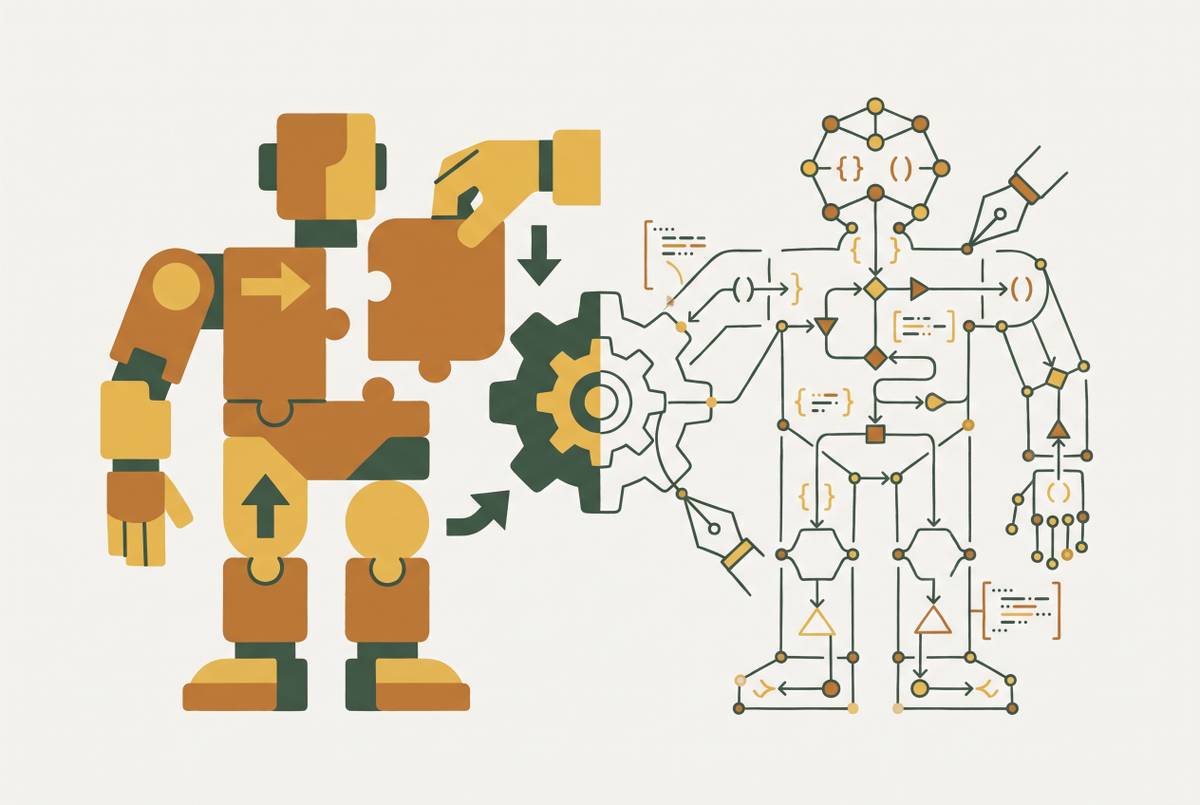
Organizations that keep their flexibility are the ones that set up their architecture so the model is a configuration choice rather than something baked into the code, and they did it before the first agent ever went live. The starting principle is to treat any single AI provider as replaceable at the architecture level, a commitment made at the foundation. In practice, that means model-agnostic routing: the model gets declared somewhere in configuration, a registry, a character file, a YAML header, while the prompts, tools, memory, and integrations stay written in a way that doesn't depend on any one provider. Swapping providers then becomes a configuration edit, not a multi-week engineering sprint. A fallback has to be tested before it's actually needed; one that has never run under real conditions is a guess dressed up as a contingency plan. Diversification needs to happen at the model level, not just across vendors, because pricing and capability shift even within a single vendor's own lineup of models and APIs over time, and spreading risk across one vendor's portfolio does nothing to protect against that same vendor's outage or restriction. For operations leaders in process-heavy, asset-heavy industries, the right moment to lock in these architectural choices is during process redesign itself, before agents get built into production workflows, not after operations have already been rebuilt around one vendor's execution environment. That's why the audit of a process comes before the selection of a platform, and not the other way around.
The governance practices that keep lock-in from re-forming after the architecture is set
An architecture that resists lock-in on the day it goes live doesn't stay that way without ongoing attention. Vendor dependencies creep back in through small decisions that no single person on the team is positioned to catch on their own. Each individual choice, using a vendor-specific feature here, extending a proprietary integration there, putting off a fallback test for later, makes sense in isolation. Over a year or two, those small choices accumulate into deep dependency that no one deliberately chose. Governance needs to cover every platform in use, with dependency reviews run quarterly at minimum and again after any material change from a vendor, a pricing update, a deprecation notice, an acquisition, a regulatory shift in the vendor's home jurisdiction. Each review should ask the same question the original architecture review asked: which components of this deployment would survive a vendor transition today, and which would need a full rebuild? If that answer has shifted since the last review, that shift is the finding to act on. Jurisdiction and sovereignty belong in this governance conversation as first-order variables now, not footnotes relevant only to European regulators, because a frontier model can be switched off overnight by a government the organization never chose, and switched back on only on terms it had no part in negotiating. For process-intensive industries, this governance work belongs inside the operations function itself. The people closest to the workflows that depend on these agents are the ones in the best position to notice dependency drift before it turns into a lock-in event.