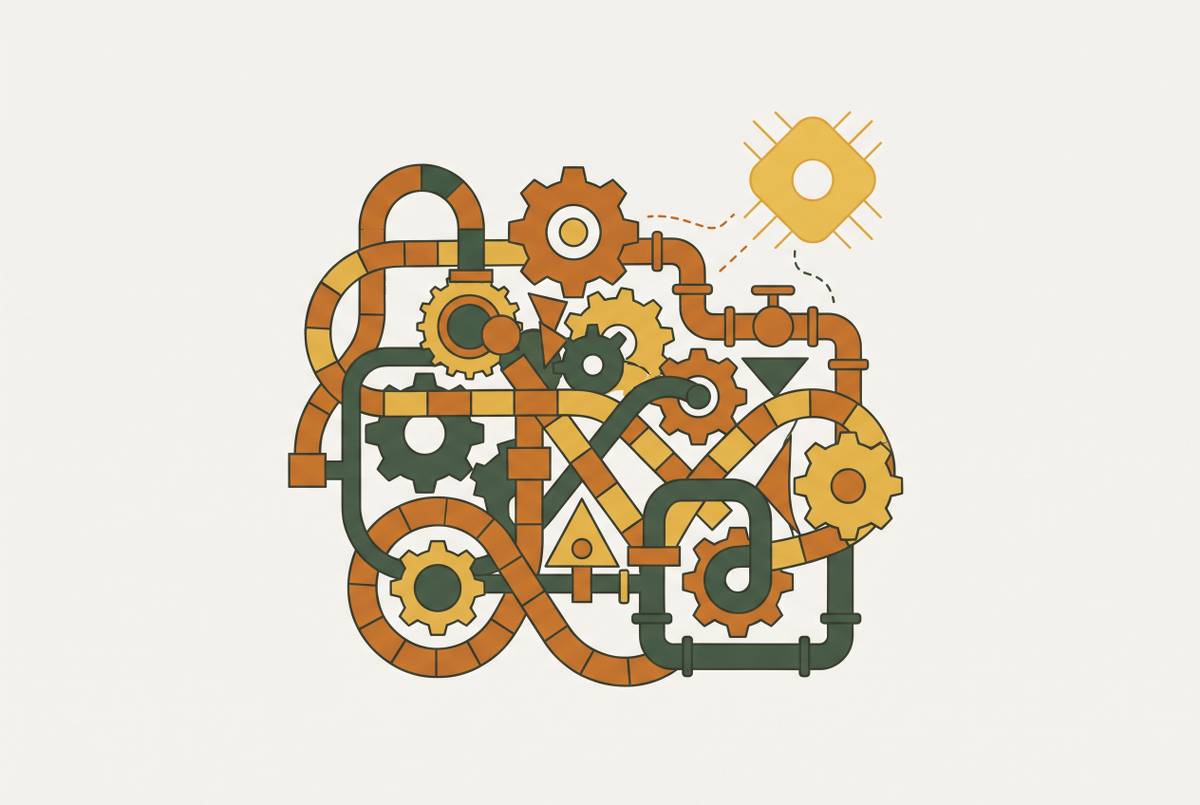
Shadow Processes in Manufacturing and Why They Break AI Deployments
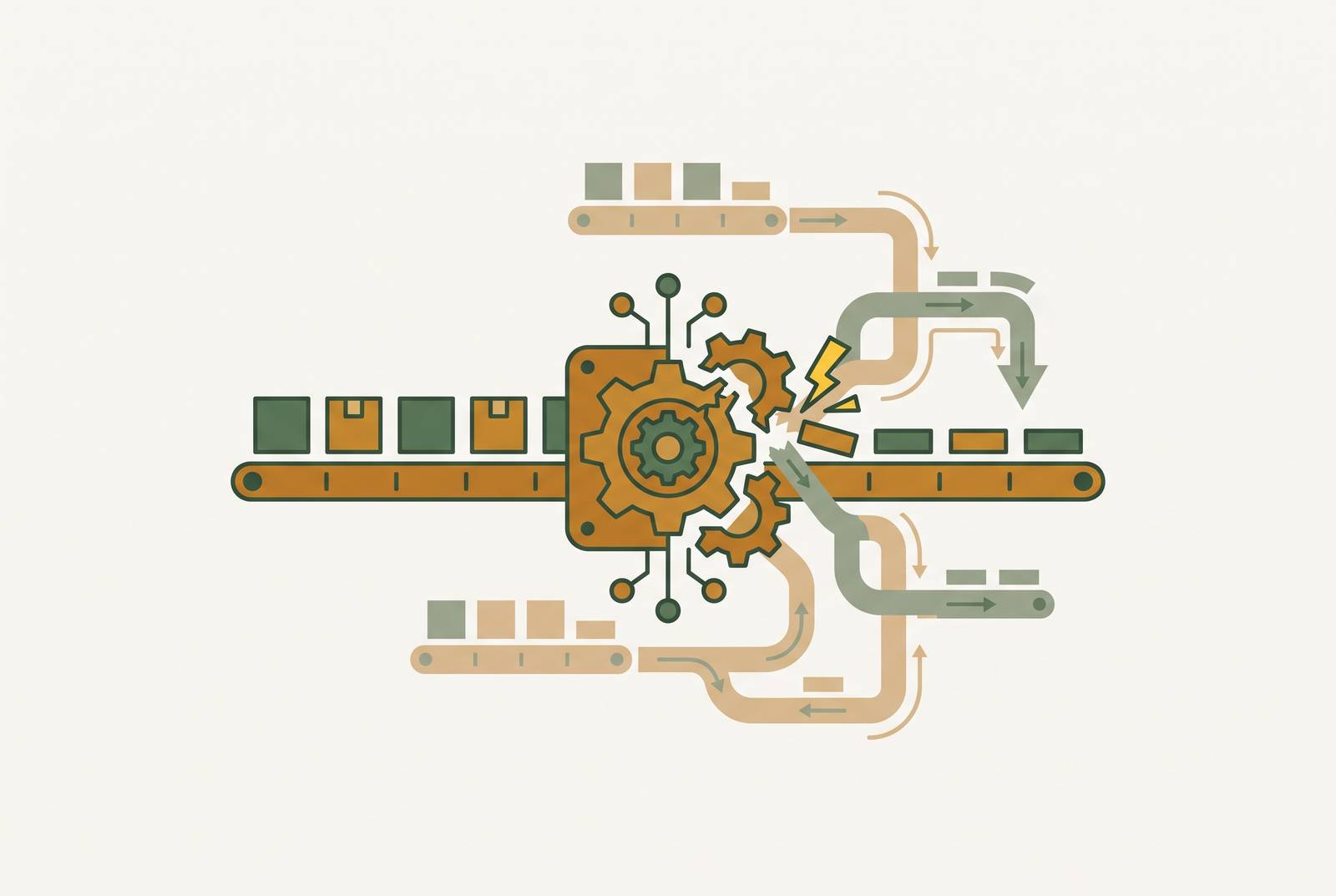
Shadow processes break manufacturing AI deployments when automation follows documentation that omits work people actually do. Before AI deployment, a process audit must find the informal decisions, exceptions, and handoffs in the work, then rebuild the workflow around them. For manufacturing, construction, and logistics operations, the starting point is a specific, painful process.
Why manufacturing operations run on two systems at once
On the factory floor, approved work instructions and informal operating routines run at the same time. The documented system includes SOPs, work instructions, and approved workflows. The second system consists of the adjustments people make where those instructions fail to support the job. A line supervisor may use a pre-shift verbal check in place of a formal quality gate that no one fills out. The check remains part of production even though the official record does not describe it.
These workarounds become defaults because the operation depends on them. Workers compensate for missing information, unreliable assumptions, and steps that do not fit the actual work. Over time, the informal routine becomes the way the job gets done, while the approved workflow remains the account of how it is supposed to happen. These departures from procedure are an unrecorded part of the operating model.
That distinction also separates shadow processes from shadow AI. Shadow AI means employees using unapproved AI tools, while shadow processes are the informal routines people already use to get work done. An organization can approve every AI tool it uses and still put those tools to work with a process model that leaves out parts of the job. Tool approval does not make the underlying work visible.
How AI deployment exposes the gap rather than closing it
AI inherits the assumptions in the process it is given. If that process omits a necessary adjustment, faithful execution can produce the wrong result. The model need not malfunction for the deployment to fail. It can follow the declared logic exactly while missing the compensating behavior that makes that logic workable. Automation then repeats the error faster and at higher volume.
RAG-based and agentic systems are especially exposed because their outputs depend on the knowledge bases and process descriptions available to them. Information that conflicts, is out of date, or is missing can lead to wrong answers that sound confident. Agents can compound the problem by fabricating missing tool inputs, proceeding through ambiguous instructions, or making commitments the process owner did not authorize. These behaviors can escape evaluation yet have direct consequences in production.
Bajaj's evaluation blindness taxonomy finds that a majority of verifiable production AI incidents are silent, with standard metrics registering normal while the system is already failing. Committing to getting the first process live within weeks, as Terminal Use describes, can force teams to show early on what they assume about how the work runs. The purpose is to expose and resolve the gap before silent failures accumulate.
Why manufacturing is where this failure hits hardest
In manufacturing, AI recommendations feed into operational technology, equipment, and production processes. A flawed input can therefore lead to a physical outcome through a short chain of decisions. The consequence may be a safety incident, a product recall, or a line stoppage. Some outcomes cannot be reversed by correcting the answer afterward.
The data beneath the process can also be unreliable. Operational information comes from sensors, machines, legacy systems, and third-party sources, often without consistent metadata, ownership, or quality controls. Gaps in OT/IT integration leave it unclear how machines, data flows, and production steps work together. Shadow processes run on top of this uneven data layer and make up for some of its weaknesses. An AI system that sees only the formal record misses both what is wrong and what people do to correct it.
Consider the engineer who preserves critical setup parameters in screenshots and handwritten notes because the ERP does not capture them. The parameters exist, and the engineer uses them, but they are absent from the system presented as the source of operational truth. A setup sheet outside the system or an experienced operator's knowledge creates the same problem. Digitizing the approved instructions alone does not capture that missing knowledge. The deployment must account for how the equipment is actually set up and run.
Speed asymmetry and why governance arrives after the damage
An individual can change how a task is done faster than an institution can revise its governance. Salahuddin, Rooney, and Hasan's typological analysis calls this difference “speed asymmetry” and treats it as a design problem. The interval between changed behavior and institutional response is where unexamined practices accumulate. Knowing the risk alone does not shorten that interval.
The same analysis finds that five major frameworks do not address shadow AI, speed asymmetry, or governance vacuum at the operational specificity required for public sector application. Those frameworks are NIST CSF 2.0, ISO/IEC 27001, COBIT, NIST AI RMF, and ISO/IEC 42001. That finding is limited in scope to governance in the public sector. The finding draws a distinction between having a framework and having controls that are specific enough to govern what people do.
For manufacturing, the corresponding risk is treating an approved policy as evidence that the operation is understood. When only part of the work is visible, the shadow behaviors that go unseen remain beyond effective oversight. This structural limit can arise even when the people responsible for governance are diligent. Waiting for policy reform to uncover every workaround leaves the underlying process untouched. Process redesign must bring oversight into the work where people make decisions.
Where the declared process and the real one diverge most dangerously, including procurement, scheduling, and handoffs
Procurement, scheduling, and cross-department handoffs require people to coordinate closely, but little of that work is written down. In procurement, the buyer may know which lead times are inflated, which suppliers need chasing at week two rather than week four, and which substitutions are accepted in practice but not in writing. An agent reading the procurement system does not receive that judgment. Without accurate process documentation and real-time tracking, it has no basis for working out when materials will arrive, when substitutions are needed, and what will be affected next.
P6 plans and similar tools describe the declared schedule, while adjustments live in a coordinator's head, a group chat, or verbal agreements at the morning standup. An AI scheduling system can therefore make confident predictions from a plan that people already know requires correction. The missing information may be the agreement that makes the sequence possible.
Handoffs spread these omissions across functions. Construction and infrastructure projects provide an amplified example through energization readiness, which depends on coordination among trades, vendors, and owners across long-lead equipment, phased delivery, and commissioning dependencies. A shadow process at one handoff can stall commissioning across the facility. In manufacturing, the same coordination problem makes procurement and scheduling gaps consequential beyond their originating departments. Each unrecorded patch can become another dependency that the next layer of automation fails to see.
Why pilots survive and production deployments fail
Pilots operate on clean, curated slices of work, while production encounters the exceptions and informal dependencies excluded from that slice. A successful pilot can establish that an AI system handles the selected inputs. It does not establish that those inputs represent the full operation. Once deployed more broadly, the system meets the shadow layer that people had kept outside the test. The apparent change in performance can reflect a change in operating conditions.
The authentication time bomb shows how this happens without an obvious failure. A system that works in month one can silently degrade by month three as APIs expire tokens, OAuth tokens need refreshing, and services change authentication methods. The system can still seem to work as it relies more and more on stale or missing data. A short pilot may end before this maintenance is needed. Production must sustain it.
Agent sprawl adds another problem as separate functions build agents for local needs without making them interoperate. Teams lose visibility into what those agents access and how they decide, while governance lacks an inventory of what is running. Undefined ownership then leaves accuracy monitoring, retraining, and retirement without clear accountability. These are operating responsibilities.
How to find broken workflows before rolling out AI
A process audit must examine how work happens, including exceptions, informal checkpoints, and compensating steps. Reading SOPs establishes the declared process but cannot establish the real one. Watching the person who does the job best is more revealing. That person's sequence exposes where the formal workflow needs help. Structured observation turns those differences into material for redesign.
A process discovery workshop gives the people who own a workflow a way to map it together. The session follows the work through its normal path and its exceptions, including decisions and handoffs that have no formal existence. For construction or logistics operations, this means examining the procurement, scheduling, and coordination steps where the recorded plan depends on informal judgment. Terminal Use is one option for this work through its process audit approach, which asks clients to show how a process runs today and where it hurts. The useful output is an agreed account of the work.
The strongest objection is that process discovery can become an excuse to postpone deployment indefinitely. That objection is valid when documentation becomes a separate program with no direct connection to a build. Discovery and automation can instead proceed on concurrent tracks, with their tasks explicitly separated and discovery feeding the build. Concurrency means working out the selected process while building from the parts its owners already understand and agree on, so work can proceed before the whole organization is mapped.
What rebuilding a process for AI actually looks like, and where to start
The first rebuild should address one specific, painful process where the gap between declared and actual work is visible and costly. Its owners already know where the workarounds are, and the informal knowledge is fresh because they use it to keep work moving. The audit begins by having them show exactly how the process runs and where it breaks. From that account, the teams can decide what to retain, standardize, or redesign before automating it.
That rebuild needs a clear process map, a single source of truth for requests and decisions, and error-pattern detection before automation is layered on. Governance must then link strategic oversight, operational management, and plant-level controls to the infrastructure where decisions are made. Phosaia Labs' framework requires every production AI system to have a documented owner, a performance baseline, a retraining trigger, and an override path.
The audit is therefore the first act of rebuilding. Whether the work is led by the teams who own the process or an AI-first operations rebuilder such as Terminal Use, the essential test is whether the new workflow reflects actual operating conditions. The first deployment need not cover the whole operation. It must be live, operate against an honest process model, and produce feedback that makes the next rebuild faster. That feedback helps the organization learn to repeat the work and keeps the process map tied to what happens in production.